

image_columns--1
image_columns--2
image_columns--3
image_columns--4

The Tappeti Process

With a focus on high quality fibres, cutting-edge, exclusive designs, flexibility and superior craftsmanship, Tappeti can achieve your design goals.

The Tappeti process is woven with quality, ethics and dedication.

A Tappeti rug or custom carpet is unique in every detail.

What sets us apart from industrially-produced textiles is we start with a deep and complete commitment to honouring your design goals. We value developing a holistic relationship that spans the entire customer experience from the first encounter through to after-care service.

Our dedicated and experienced sales managers respect the creative process and have thorough knowledge of how we translate vision into outcome. They will take the time to understand your project and your design goals so the solution proposed is truly bespoke.

For those seeking a considered rug without the custom development process, Ora by Tappeti offers a curated selection of Tappeti designs, fibres and colourways that are ready to ship. Created with the same attention to design and quality, Ora makes it easy to find the right rug, ready now.

The in-house design team is also expertly trained in developing and specifying custom concepts in a range of specialised fibres, pile types and colour palettes with an impeccable attention to detail. The artwork that will form the basis of your commission is produced to scale with full specification of all design elements prior to manufacturing.

While the artisans who hand-make each rug are using techniques passed down for generations, our quality control processes are state-of-the-art, including the documentation of each area of a rug in highly technical detail. Every knot, weave, colour and texture are rigorously matched between the agreed art design specifications and the final completed item.

We also ensure our quality control processes are followed throughout production with inspections at key points including completion and arrival for installation, to ensure our impeccable standards are maintained on every project.

CUSTOM PROJECT ENQUIRY

Every Tappeti rug begins with understanding the project.

The initial enquiry is where we establish the foundation for the rug. We begin by understanding the space, the design direction and the practical requirements that will influence every decision that follows.

At this stage, we work with the client, designer or project team to understand what the rug needs to achieve, where it will be used and how it needs to perform within the space. We also establish the project budget, required timeframe and key specifications before moving into design development.

Project Type
| Residential · Commercial · Hospitality

The setting informs the approach. Residential projects may prioritise character and comfort, while commercial and hospitality spaces may require greater consideration of durability, traffic and performance.

Budget
| Project Parameters Established Early

The budget helps determine the appropriate balance of fibre, construction, detailing and design, ensuring the proposed rug is aligned with the project from the outset.

Lead Time
| Key Timeframes and Project Dates

The required timeframe informs the design, approval, production and delivery schedule, allowing each stage to be planned accordingly.

Product Requirements
| Dimensions · Application · Performance · Project-Specific Needs

We establish the physical and technical requirements, including dimensions, placement, application, performance and any details specific to the project.

Every rug begins to take shape through a considered design process.

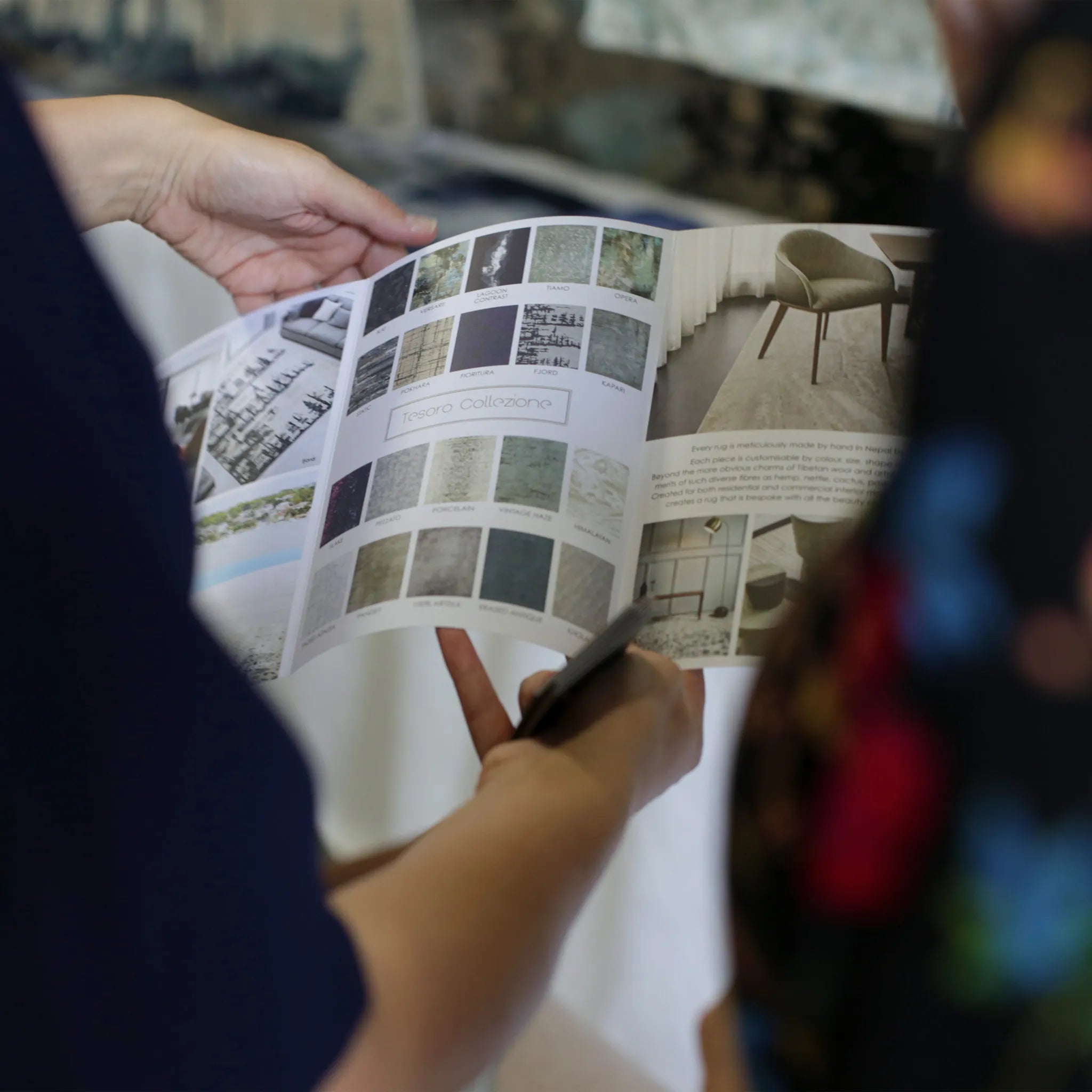
With the brief established, we begin translating the project requirements into the visual and physical characteristics of the rug. Colour, fibre, placement, scale, pattern and pile height are considered together, allowing the design to respond to both the vision and the space.

Consultation
| Colour · Placement · Fibre · Pile Height

The consultation brings together the creative and practical considerations of the project. We discuss the intended atmosphere, colour direction, proportions, placement and material options, while considering how the rug will work within the wider interior.

Design Development
| Colour · Materials · Manufacture

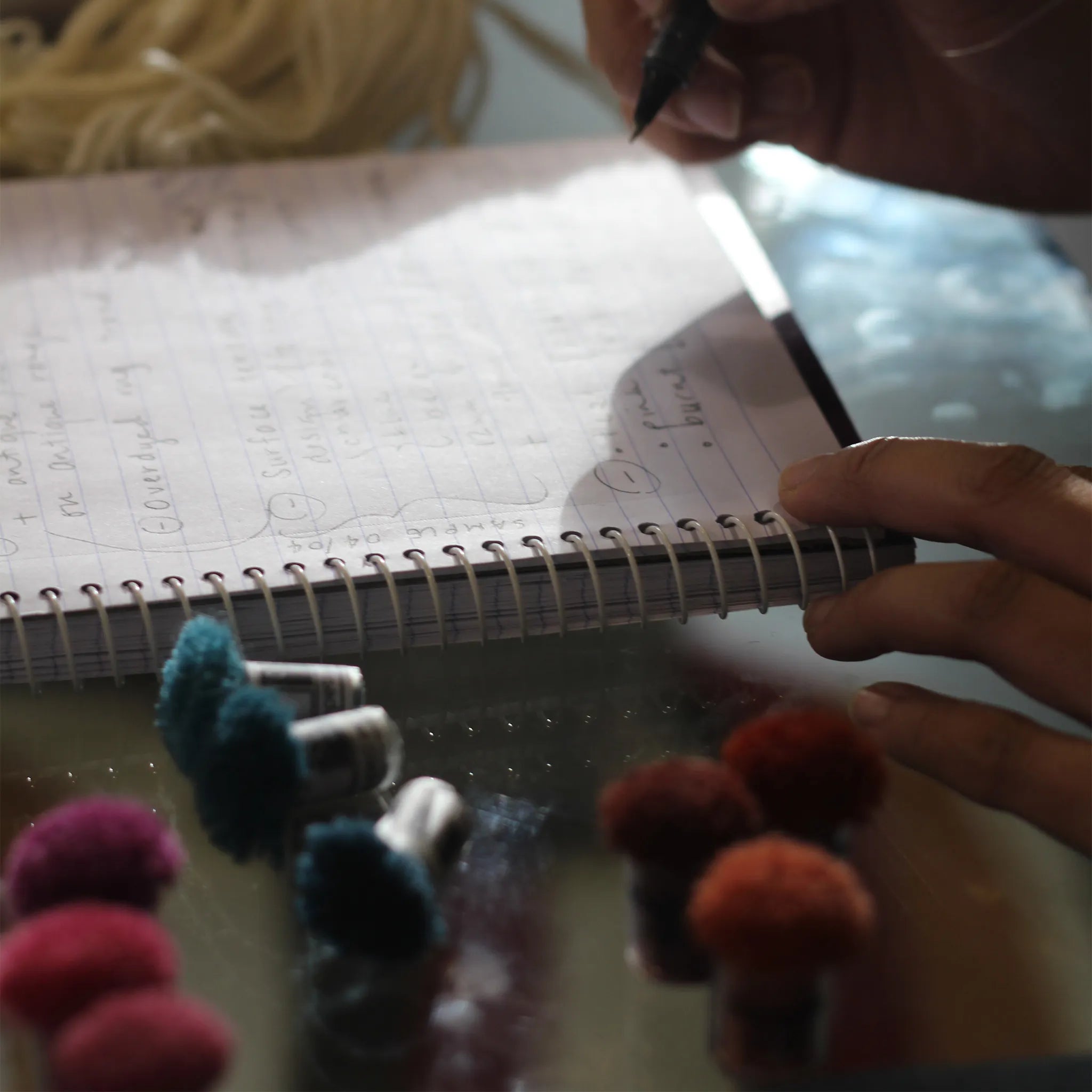
The design is developed through visual references, colour direction, material selections and manufacturing considerations. A design board brings these elements together, providing a clear view of how the rug will look and feel before production.

Design development allows the details to be refined as the project progresses. Colour, scale, composition, fibre and construction can be considered together to ensure the final design is both visually resolved and appropriate for its intended application.

Signoff & Manufacture
| Approval · Manufacturing Files · Production

Once the design is approved, the final details are prepared for production. Manufacturing files are developed from the approved design, with the required specifications confirmed before the rug is placed into production.

Lead time and country of origin are confirmed at this stage, providing clarity before manufacture begins.

The design brief determines the fibre, colour, construction and pile height, shaping how the rug is made and ultimately looks and feels. Tappeti works with a considered selection of natural and sustainable materials, chosen for their qualities, longevity and suitability to each project. The material selection is an important part of creating rugs that are designed to last.

Yarn Dyeing
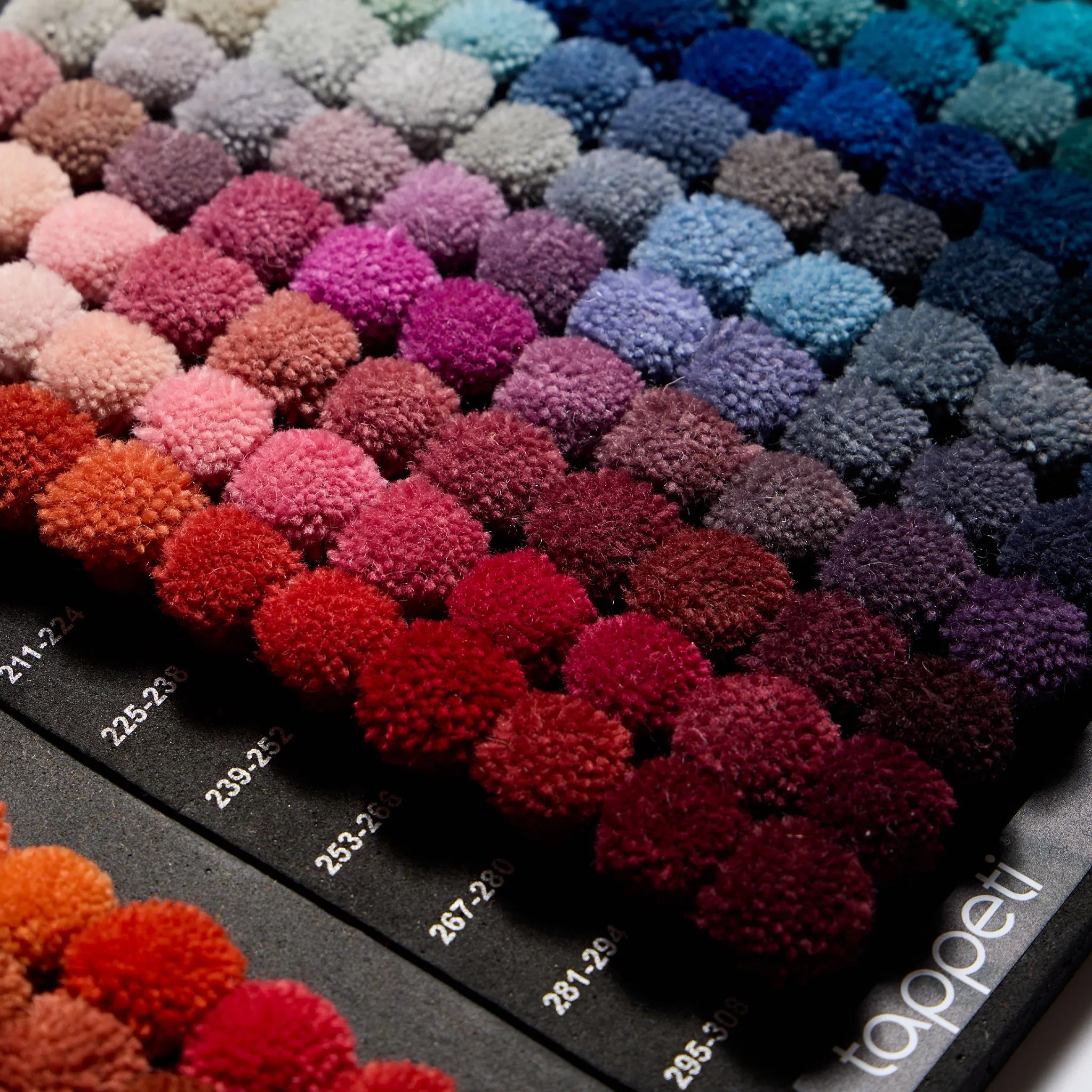
Colour is developed through yarn dyeing, allowing the selected fibre to take on the required tone, variation and depth. Depending on the design, yarn can be dyed in a regular colour, developed into an ombré effect or customised to achieve a specific result. Each fibre responds differently to dye. This natural variation contributes to the character of the finished colour and helps create the depth and richness associated with handcrafted rugs.

Fibre
| Wool · Art Silk · Nettle · Hemp · Linen

Dyeing
| Regular · Ombré · Custom

Hand-Knot
Hand-knotting is one of the most traditional methods of rug making. Individual yarns are tied by hand onto the foundation, building the rug row by row.

The density, fibre and knotting technique can be varied according to the design, allowing intricate patterns, subtle changes in texture and different levels of pile height to be achieved. The process is highly detailed and gives each rug its own handmade character.

Hand-Tuft
Hand-tufting uses a hand-held tufting tool to insert yarn into a prepared foundation. The yarn is worked through the design to build the required pattern, texture and pile height.

Once tufted, the yarn is secured and the surface is finished to achieve the desired appearance and feel. This method allows a wide range of textures, shapes and pile effects to be developed within the approved design.

Craft
| Hand-Knot · Hand-Tuft

Before a rug leaves production, it passes through a detailed quality control process to ensure it meets the approved design, specifications and expected standard. Once approved, it is carefully prepared for its journey from the workshop to the project.

Quality Control
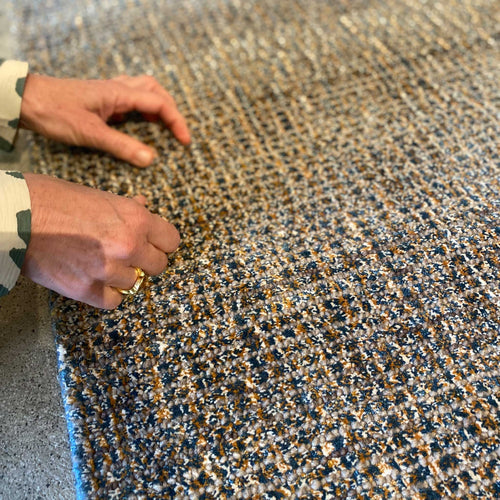
Each rug is inspected against the approved design and specifications. Dimensions, pile height, colour, design and overall finish are checked to ensure the completed rug reflects what was approved.

The rug is then unrolled for a final inspection before being carefully rolled and packaged for transport. Packaging is also checked to help protect the rug throughout its journey.

Quality Control Checklist
| Dimensions · Quality · Pile Height · Colour · Design

Additional Rug Protection
A non-harmful protective treatment can be applied to the rug. The treatment helps resist everyday wear and provides an additional layer of protection, helping to maintain the rug’s appearance and extend its life.

Rug Protection
| Available Upon Request · Protective Treatment

Shipment
Once the rug has passed quality control and is prepared for delivery, the appropriate method of transport is arranged according to the project requirements and lead time.

Depending on the project, rugs may travel by air or sea. Each shipment is coordinated to ensure the rug arrives ready for its final stage.

Journey
| Air · Sea · Lead Time · Delivery

Once the rug is complete and approved, delivery and installation are coordinated according to the project requirements, site conditions and intended application. The installation method is considered from the outset to ensure the finished rug integrates seamlessly into the space.

Delivery
Delivery is coordinated around the project schedule and installation requirements. The rug is carefully handled throughout delivery to ensure it arrives ready for placement or installation.

Freelaid
A freelaid rug is finished as a standalone piece and placed directly into the space. This allows the rug to be repositioned, removed or replaced without altering the surrounding floor.

Inlaid
An inlaid rug is fitted into a designated area within the flooring, creating a more integrated finish. Dimensions, placement and floor details are confirmed to achieve a precise fit within the space.

Wall-to-Wall
Wall-to-wall applications extend the rug across a designated area as a continuous floor covering. Dimensions, site conditions and installation requirements are confirmed to ensure the finished installation is seamless.

Installation
| Freelaid · Inlaid · Wall-to-Wall

Made for the Space
From delivery through to final installation, the finished rug is carefully placed according to the way it was designed to be experienced. The final step brings the rug from the workshop into the space it was created for.